

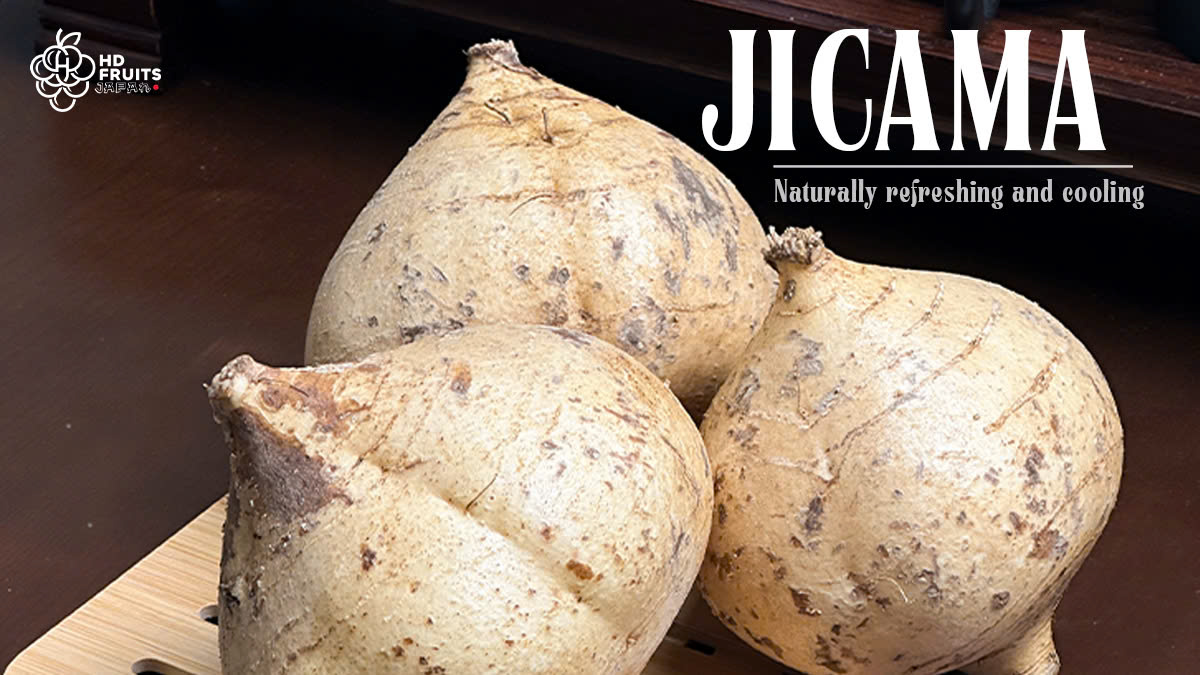
Jicama in Japan is a root vegetable that many Vietnamese people look for because of its refreshing taste, white flesh, crisp texture, and ease of eating. Compared with many other vegetables, jicama has the advantage of tasting good both raw and cooked, and it works well in a wide range of dishes, from salads, Vietnamese-style mixed dishes, and stir-fries to home-style soups. In the Japanese market, this root often appears under names such as ヒカマ, Jicama, or Singkamas. One food store in Japan is currently listing Singkamas 1kg at 1,296 yen including tax, showing that real purchasing demand exists rather than just casual interest.
For many Vietnamese people living in Japan, jicama is also a familiar and easy-to-enjoy food because it can be eaten like a fruit or as a fresh snack vegetable. Simply peel it, cut it into pieces, and dip it lightly in chili salt or lemon juice, and it already tastes great. In our view, this is the kind of vegetable that is very easy to eat regularly because the flavor is mild, not pungent, and especially suitable for people who enjoy light, refreshing foods that do not feel greasy. FoodsLink also notes that jicama is often eaten raw, cut into sticks or cubes, and served with salt, lime juice, or chili pepper.
What Is Jicama In Japan?
What Kind of Root Vegetable Is Jicama?
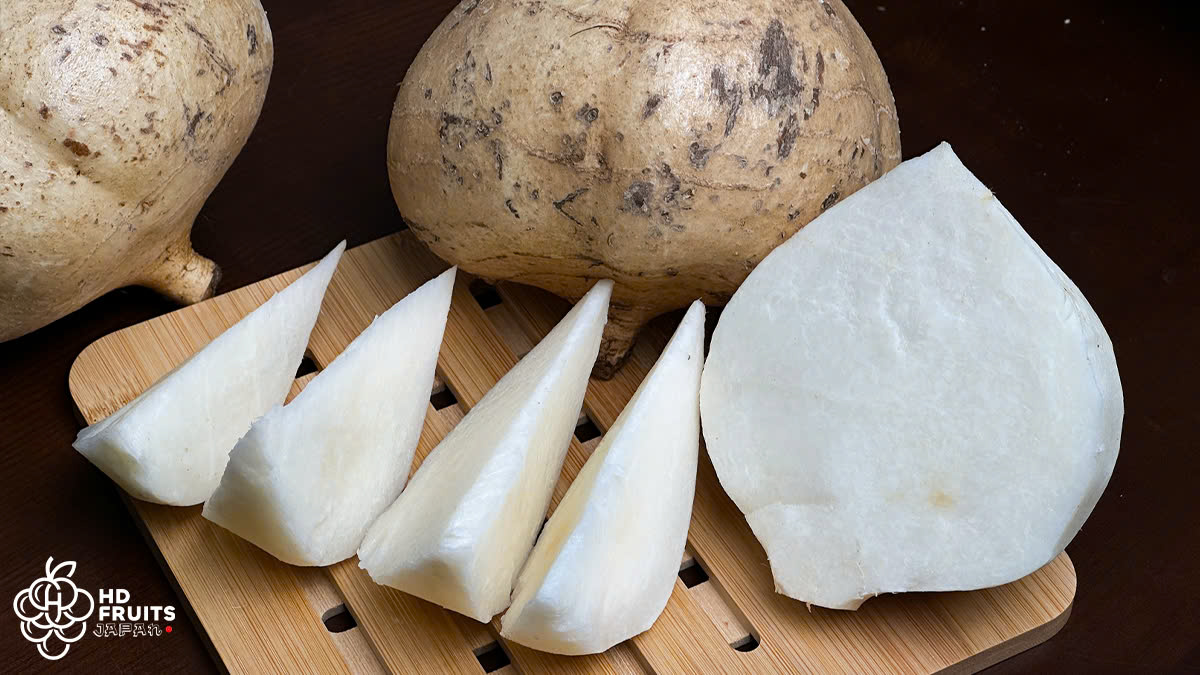
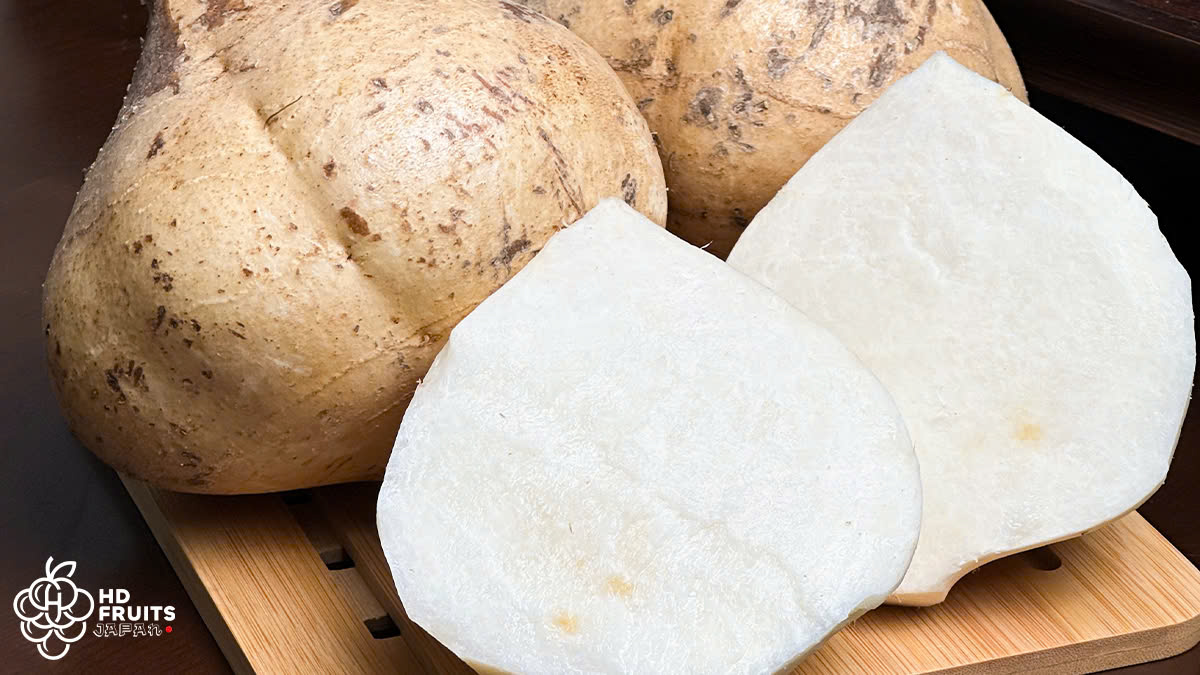
Jicama in Japan is essentially the edible root of the jicama plant, a legume originally from Central America that is now used in many Asian countries as well. The edible portion is the root, which has light brown to yellow-brown skin and white, crunchy, fairly juicy flesh inside. FoodsLink describes the texture of hikama as distinctly crisp, somewhat like daikon radish but less watery, with a slight impression similar to pear or yacon, along with a mild aroma reminiscent of beans or burdock.
What makes this root different is that the flesh contains little sap, the cut surface does not brown quickly, and it has a light sweetness that makes it easy to eat. Because of that, jicama in Japan can be treated both as a vegetable and as a fresh snack without requiring complicated preparation. From an eating-experience perspective, this is one of the few root vegetables that still feels genuinely enjoyable when eaten raw thanks to its crunch and juicy texture.
Easy ways to recognize jicama:
- White flesh with a crisp, slightly juicy texture
- Light brown or yellow-brown skin
- Mild natural sweetness without a strong smell
- Suitable for eating raw, making salads, stir-frying, or cooking in soup
What Is Jicama Called in Japan?
In Japan, the most common name for jicama is ヒカマ. In addition, on shops selling Philippine or Southeast Asian foods, you may also see names such as Jicama or Singkamas. FoodsLink also shows the name 葛芋 as a Japanese-style name for this root.
This is especially important for first-time buyers, because if you search only for the Vietnamese term for jicama, you may not get many useful results in Japan. In practice, if you want to find it more quickly, it is better to try search terms such as ヒカマ, Jicama, or Singkamas on Google or Japanese e-commerce platforms.
Is Jicama Common in Japan?
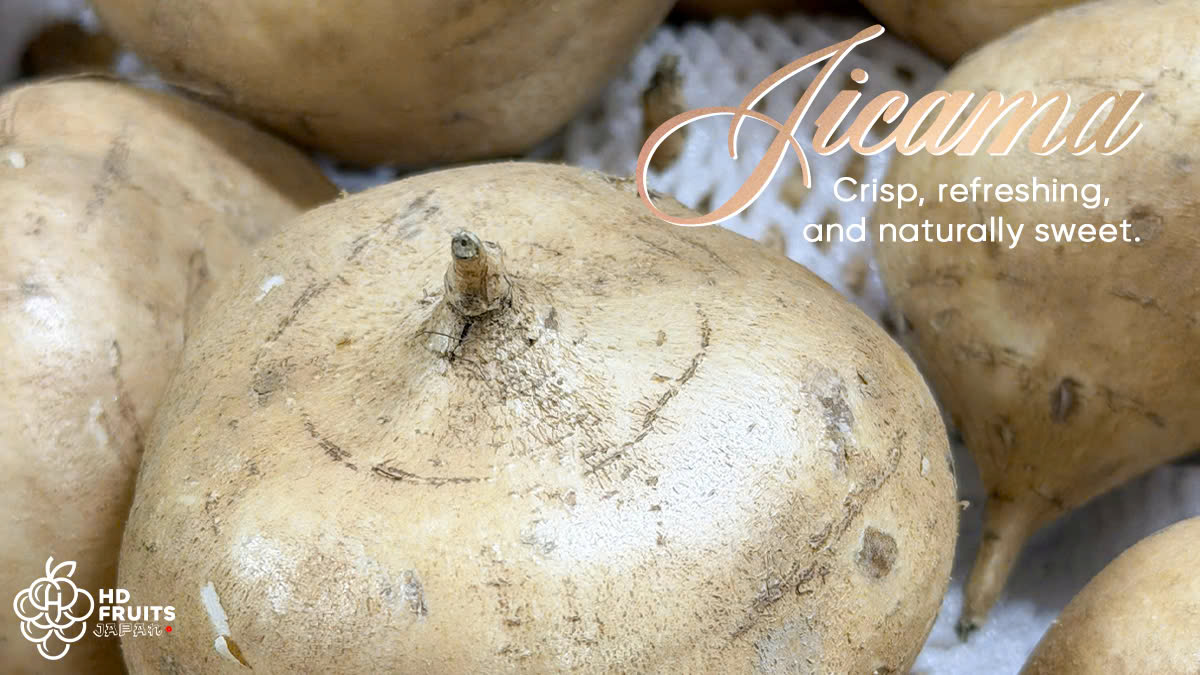
Jicama in Japan is not a mainstream vegetable like onions, potatoes, or daikon radish. Based on search results and public product pages, it mainly appears through imported-food channels, ethnic grocery shops, or stores specializing in Philippine or Southeast Asian products, rather than being widely available in ordinary Japanese supermarkets. Rakuten currently shows 163 results for the keyword ヒカマ, which suggests that the product is not “extremely rare,” but it is clearly not a mass-market staple either.
In other words, jicama in Japan is not impossible to find, but buyers need to know the right name and the right channels to search. This is also why many Vietnamese people who are new to Japan often feel that it is hard to find, even though the product is actually available if searched under the correct terms.
How Is Jicama in Japan Different from Jicama in Vietnam?
In essence, jicama in Japan and jicama in Vietnam are quite similar: both have white flesh, a light sweetness, taste good when eaten raw, and work well in salads, Vietnamese-style mixed dishes, stir-fries, or soups. The biggest difference lies in the buying context and the names used. In Vietnam, jicama is more common and easier to buy in markets or supermarkets. In Japan, however, buyers often need to look for it through imported-food shops, Philippine stores, or online platforms.
From our observation, the difference in naming is exactly why many people think jicama in Japan is a different root vegetable. In reality, the issue is often simply unfamiliarity with names such as ヒカマ or Jicama, rather than the product being truly hard to find.
The most noticeable differences:
- In Japan: often sold through imported-food shops or online
- In Vietnam: commonly available in markets and supermarkets
- In Japan: usually searched as ヒカマ / Jicama / Singkamas
- In Vietnam: usually searched directly by its Vietnamese name
Why Are So Many Vietnamese People Looking For Jicama In Japan?
It Matches the Preference for Light, Refreshing, Crisp, Mildly Sweet Foods
One of the biggest reasons is that jicama in Japan suits Vietnamese taste very well. FoodsLink describes hikama as having a crystal-like crunch similar to radish, with a slight sweetness and strong suitability for eating raw. This flavor profile makes it easy to eat, not pungent, not greasy, and suitable for both adults and children.
It Is Easy to Eat Raw Like Fruit or a Fresh Snack Vegetable
FoodsLink explains that in Mexico, jicama is often cut into sticks or cubes and eaten like fruit, sometimes sprinkled with salt, squeezed with lime, or topped with chili pepper. This style of eating is very close to Vietnamese snacking habits, so it is quite understandable that many people actively look for jicama in Japan.
It Is Easy to Cook for Family Meals
Jicama in Japan is not only good raw; it is also a very flexible ingredient for everyday meals. FoodsLink notes that it can be sliced thin for salads, cooked like radish, stir-fried with other vegetables, or prepared kimpira-style. When cooked, hikama feels quite similar to radish and absorbs broth easily.
It Suits People Looking for Low-Calorie Vegetables
A Singkamas product page in Japan describes jicama as a low-calorie root rich in fiber and vitamin C. Cleveland Clinic also notes that jicama contains 6 grams of fiber per cup, is 90% water, and provides more than 26 mg of vitamin C per cup, which is close to half the recommended daily intake. This helps explain why jicama in Japan is quite suitable for people who want lighter foods, better calorie control, or healthier snack options.
How To Recognize Good Jicama
Shape, Skin, and Firmness
According to FoodsLink, you should choose roots with a nice round shape, a relatively clean surface, and no major cracks or scratches. When held in the hand, good jicama should feel firm and tight; roots that are soft, wrinkled, or show signs of shriveling should be avoided.
What It Should Look Like When Cut
Good jicama usually has bright white flesh, does not discolor quickly after cutting, and has a clear crunch without becoming mealy. FoodsLink states that hikama flesh is less prone to browning on the cut surface and can be used much like daikon in cooking. When eaten raw, it should feel crisp, cool, and lightly sweet.
Signs of Poor-Quality Jicama
When buying jicama in Japan, avoid roots with the following signs:
- Soft, wilted, or wrinkled roots
- Skin with many cracks or bruises
- Flesh that is no longer clearly white or feels mealy
- Roots that feel light, dry, or no longer juicy
If buying online, it is a good idea to check the product immediately after delivery. With fresh produce, spotting softness or shipping damage early makes it much easier to resolve issues with the seller.
How Much Does Jicama Cost In Japan?
Market Price Range
From the public information currently available, Philippine Foods in Japan lists Singkamas 1kg at 1,296 yen including tax. For larger orders, the price drops to 972 yen for 3–5 units and 864 yen for 6 or more units. Based on that reference point, the common price range for jicama in Japan can be estimated at around 1,000–1,300 yen/kg, depending on timing and sales channel.
Factors That Affect the Price
The price of jicama in Japan can vary depending on several factors:
- Whether the product is imported or sold domestically
- Seasonal availability and stock levels
- Retail sales versus bulk sales
- Packaging and shipping costs
In addition, because this is not a mainstream root vegetable in Japan, the supply may not be consistent year-round in every shop. As a result, prices at imported-food channels are often higher than those of ordinary vegetables.
Should You Buy Jicama If the Price Is Too Cheap?
With jicama in Japan, a very low price can come with risks such as older stock, softness, loss of crunch, or poor storage conditions. If you plan to eat it raw, freshness and quality matter much more than a small price difference. In practical terms, a jicama root that has become spongy or lost its crispness makes the eating experience noticeably worse.
When buying, it is best to prioritize sellers that provide:
- Clear product photos
- Specific weight descriptions
- Delivery information
- Support policies if the product arrives damaged
Where To Buy Jicama In Japan?
Philippine or Southeast Asian Food Stores
This is currently the most visible type of sales channel. Philippine Foods sells Singkamas 1kg, which suggests that jicama in Japan is more commonly distributed through Philippine or Southeast Asian food channels than through ordinary Japanese supermarkets.
Japanese E-Commerce Platforms
Rakuten currently shows 163 results for the keyword ヒカマ, which indicates that online demand is real and that users can absolutely search by the Japanese or English name rather than by the Vietnamese name.
Farms or Direct Sellers
Besides import channels, jicama in Japan may also appear through direct sellers or Asian grocery stores with domestic delivery. This gives buyers more options beyond traditional Philippine food shops. Even so, stock availability still depends quite a lot on supply at a given time.
Tips for Choosing a Trustworthy Seller
When buying jicama in Japan, it is best to prioritize sellers that clearly provide:
- The correct product name: ヒカマ / Jicama / Singkamas
- Clear weight or selling format
- Real product images
- Delivery and condition details
- Specific contact information
This is also a very suitable content direction for HD FRUITS JAPAN if you are building your website in an expert-guidance style: people buying fresh produce do not only care about price, but also care strongly about transparency and order handling.
How To Prepare Jicama Properly Before Eating
How to Peel Jicama
FoodsLink explains that jicama skin is quite fibrous and firm, and it can be peeled by hand starting from the top or bottom. If fibrous layers remain after peeling, you can use a knife or a peeler to remove them cleanly.
Does It Need to Be Soaked in Salt Water?
Jicama in Japan does not contain much sap, and the flesh does not brown quickly after cutting, so there is no strict need to soak it in salt water for a long time like some other root vegetables. If you want it cleaner for raw eating or salads, you can simply rinse it briefly with water or soak it very quickly in lightly salted water, then drain it.
How to Cut It for Better Raw Eating
Depending on how you want to eat it, jicama can be cut in several ways:
- Cut into sticks for dipping in chili salt or chili seasoning
- Slice thinly to eat like a snack
- Dice or shred it for salads and Vietnamese-style mixed dishes
How to Store It After Cutting
FoodsLink recommends that whole jicama roots be stored in a cool, dark place, wrapped in newspaper like potatoes, and they may last for about one month. It also notes that refrigeration that is too cold can damage the root. Once cut, it should be wrapped well and used soon in order to keep its crunch and prevent the cut surface from drying out.
What Are The Best Ways To Eat Jicama In Japan?
Eat It Raw
This is the most common and natural way to enjoy it. When eaten raw, jicama in Japan feels crisp, cool, and lightly sweet, almost more like fruit than like cooked vegetables. FoodsLink confirms that hikama is very suitable for raw consumption.
Eat It with Chili Salt, Lemon, or Chili Seasoning
FoodsLink notes that in Mexico, jicama is often cut into sticks or small pieces and topped with salt, lime juice, or chili powder. This style is very close to Vietnamese snacking habits, so it can easily be adapted in Japan if you want a stronger flavor.
Make Jicama Salad
Jicama can be sliced thinly or shredded to make a salad similar to a radish salad. FoodsLink suggests that hikama pairs especially well with apples, creating a crisp, lightly sweet, and refreshing dish. This makes it a very good choice for people who prefer light meals that are easy to eat.
Cook It in Soup, Stew, or Broth Dishes
When cooked, jicama in Japan feels quite similar to radish. It absorbs broth easily, does not have a strong smell, and works well in soups, stews, or simmered dishes. FoodsLink even comments that if you do not tell people beforehand, they may think they are eating radish.
Stir-Fry It or Use It in a Kimpira-Style Dish
Besides soup-based dishes, jicama can also be stir-fried with other vegetables. FoodsLink notes that hikama keeps a pleasant level of crunch when stir-fried and also works well in kimpira-style dishes. This is a strong advantage, since not every root vegetable keeps a good texture after stir-frying.
5 Easy Dishes To Make With Jicama In Japan
Jicama with Chili Salt
The simplest dish is to peel the root, cut it into sticks, and dip it in chili salt or chili seasoning. This way of eating follows the traditional use of jicama in Mexico quite closely and also fits Vietnamese taste very well.
Jicama Salad with Apple or Greens
Thinly slice the jicama and mix it with apple, leafy greens, or a light sweet-and-sour dressing to create a crisp, refreshing salad. FoodsLink specifically mentions the combination of hikama with apple.
Vietnamese-Style Jicama Salad with Dried Shrimp
Because jicama is crisp, lightly sweet, and low in fiber, it works very well in Vietnamese-style mixed salads. When shredded and mixed with dried shrimp, herbs, carrots, or sweet-and-sour fish sauce, the dish remains fresh and not heavy. This is a very natural application based on jicama’s raw and salad-friendly qualities.
Stir-Fried Jicama with Vegetables
Cut the jicama into sticks or medium-thick slices, then stir-fry it with carrots, bell peppers, onions, or meat. FoodsLink confirms that jicama performs well in stir-fried dishes and still keeps its crunch.
Jicama Soup with Minced Meat or Bones
Because cooked jicama feels quite similar to radish, it can be used in family-style soups with minced meat, bones, or light broth-based dishes. This is an excellent way to take advantage of its mild smell and its ability to absorb broth easily.
Nutritional Value And Notes For Eating Jicama
Low in Calories, with Fiber and Vitamin C
Philippine Foods describes singkamas as a low-calorie root rich in fiber and vitamin C. Cleveland Clinic also notes that jicama contains 6 grams of fiber per cup, 90% water, and over 26 mg of vitamin C per cup, nearly half of daily needs. This gives it a very attractive nutritional profile for people who want a lighter snack option.
Why Do Many People Choose Jicama for Diet-Friendly Eating?
Jicama contains a lot of water, has a satisfying crunch, is low in calories, and creates more of a “substantial bite” than many processed snacks. Cleveland Clinic highlights the fiber + water combination as helpful for fullness and digestion. For that reason, jicama in Japan is very suitable as a side dish, between-meal snack, or light salad ingredient.
Important Notes When Eating Jicama
Illinois Extension explains that the safe edible portion is the inner root flesh after removing the thick skin, while the stems, leaves, and seeds should not be eaten. When preparing jicama, you should peel away the fibrous outer layer, wash it well, and then eat it raw or cook it. Also, because jicama is very cool and crisp, people with sensitive stomachs or who are eating on a very empty stomach should consume it in moderation.
Quick reminders when eating jicama:
- Only eat the peeled root portion
- Do not eat the stems, leaves, or seeds
- Eat in moderation if your stomach is sensitive
- If eating raw, wash and prepare it carefully
Frequently Asked Questions About Jicama In Japan
Is Jicama Easy to Buy in Japan?
It is not especially common in ordinary Japanese supermarkets, but it can still be bought through Philippine or Southeast Asian shops, some Asian grocery stores, and online platforms such as Rakuten.
What Is Jicama Called in Japanese?
The most common name is ヒカマ. You may also see Jicama, Singkamas, and on some informational pages, 葛芋.
Does Jicama Need to Be Refrigerated?
For whole roots, FoodsLink recommends storing them in a cool, dark place and avoiding refrigeration that is too cold, because that can damage the root. Once cut, it should be wrapped well and used soon.
Can Jicama Be Eaten Raw?
Yes. This is one of the most common ways to eat jicama, as long as it has been peeled properly and prepared correctly.
Is It Better to Buy Jicama by the Kilogram or by the Piece in Japan?
If you are trying it for the first time, buying by the piece or in a small amount is more flexible. If you are planning to cook multiple dishes or use it for family meals or food service, buying by the kilogram is usually more practical and more cost-efficient, especially when some shops offer discounts for larger quantities.