

If you are living in Japan and looking for a mango that is easy to enjoy and still feels close to the fruit flavors of home, Cat Chu mango is definitely worth trying. From our experience serving Vietnamese customers in Japan, this is one of the easiest mango varieties to recommend because it is not overly sweet, has a gentle aroma, thick flesh, and a smooth mouthfeel.
What makes many people love Cat Chu mango is not an intense sugary taste, but its balance:
- lightly sweet
- low in fiber
- thick, soft flesh
- easy to enjoy fresh or in chilled dishes
At HD FRUITS JAPAN, we find that customers who prefer mangoes that are easy to eat daily often lean toward Cat Chu mango for exactly these reasons.
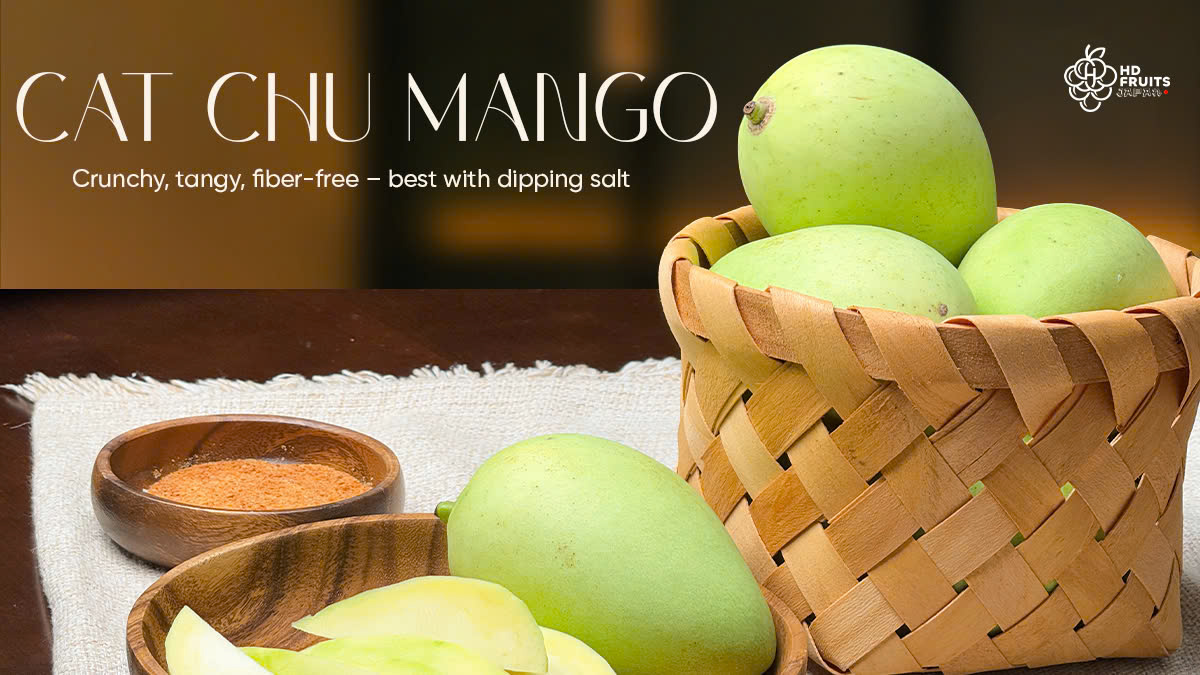
What Is Cat Chu Mango? Why Do So Many People Like It?
According to geographical indication descriptions, Cat Chu mango has a relatively shorter and rounder body, with a slightly raised base. In more recent buying guides, this mango is often described as having a slightly elongated shape, a full body, naturally yellow skin when ripe, and thick flesh with very little fiber. Many sellers also record a common fruit weight of around 350–450 grams.
From a practical buyer’s perspective, first-time customers usually remember Cat Chu mango for four things:
- medium-sized fruit that is easy to buy for family use
- attractive yellow skin that does not need to be perfectly even
- thick golden flesh when cut open
- a soft, smooth texture with noticeably less fiber than many common mango varieties
This is also why Cat Chu mango is often seen as an approachable choice for people who want a mango that feels premium but still easy to enjoy regularly.
Is Cat Chu Mango in Japan Delicious?
Our answer is yes, as long as you choose the right ripeness and buy from a source that stores the fruit properly. The appeal of Cat Chu mango comes from balance rather than intensity: it is not overly fragrant, not too sharp in sweetness, soft to eat, lightly sweet, and easy to match with many tastes.
This is also how many guides describe the variety:
- light aroma
- gentle sweetness
- easy to eat
- low fiber
For Vietnamese people in Japan, that matters a lot. Not everyone enjoys mangoes that are extremely sweet or strongly scented. Cat Chu mango is often preferred because it feels lighter, cleaner, and easier to enjoy more than once.
What Makes the Flavor of Cat Chu Mango Stand Out?
The flavor of Cat Chu mango is most often described as lightly sweet. Compared with some mango varieties that have a stronger sweetness and a more intense aroma, Cat Chu mango feels more balanced: sweet but not sharp, fragrant but not overpowering, and soft without becoming mushy when perfectly ripe.
Some mango guides note that naturally ripened mangoes can measure around 18–20% Brix, while Cat Hoa Loc mango may reach 20–22% Brix. This helps explain why Cat Chu mango is often perceived as sweeter in a softer, gentler way rather than in a rich or heavy way.
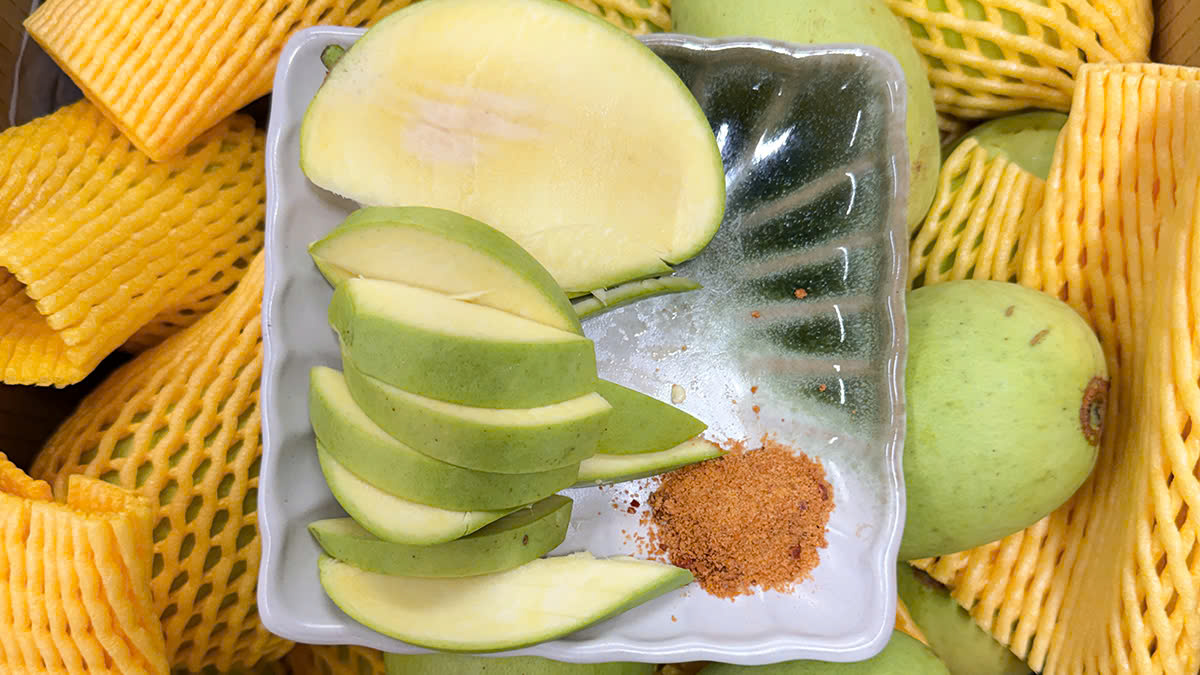
In our opinion, if you like fruit that you can eat several slices of without getting tired of it too quickly, Cat Chu mango is often the better fit.
Is Cat Chu Mango Suitable for the Taste of Vietnamese People in Japan?
Very much so. Many Vietnamese customers in Japan tend to look for fruit with a few clear qualities:
- easy to eat every day
- low in fiber
- good when chilled
- suitable for the whole family
Cat Chu mango matches these expectations well. It is often described as a beloved specialty thanks to its attractive look, good usability, and balanced flavor. Buying guides also emphasize strengths such as:
- thick flesh
- small seed
- gentle sweetness
- reasonable value
From our perspective, this is one of the easiest mangoes to recommend to first-time buyers because the chance of it being “easy to like” is relatively high.
What Determines Whether Cat Chu Mango Sold in Japan Tastes Good?
Even though the fruit may all be labeled Cat Chu mango, the eating quality can vary significantly once it reaches the customer. Based on practical experience, the three most important factors are:
- ripeness at delivery
- source and storage conditions
- ability to choose the right fruit
These are also the same three factors most frequently repeated in mango selection guides.
Ripeness When the Fruit Reaches the Customer
An underripe mango is usually:
- firm
- less fragrant
- not fully sweet
- sometimes slightly bland or faintly astringent
An overripe mango is more likely to be:
- too soft
- lacking firmness
- mushy
- less enjoyable when eaten fresh
A practical guide to Cat Chu mango describes naturally ripened fruit as evenly soft with gentle elasticity. The National Mango Board also recommends allowing mangoes to ripen at room temperature before refrigerating them.
From our experience, the best ripeness is when the fruit yields slightly under gentle pressure and the stem has a pleasant fragrance, but the mango still feels structured in the hand.
Source and Storage Conditions
A better source usually provides mangoes that are:
- more uniform
- firmer in hand
- fresher at the stem
- naturally more aromatic
For storage, the National Mango Board recommends that unripe mangoes be kept at room temperature and not refrigerated before ripening. Once ripe, whole mangoes can be refrigerated for up to about 5 days.
This is especially important in Japan, where shipping and cold-chain handling can affect texture and flavor. From our own handling experience, refrigerating green mangoes too early can noticeably reduce flavor even if the outside still looks attractive.
How to Choose the Right Mango
Even when the source is reliable, customers should still know how to choose a good fruit. The most commonly repeated signs include:
- natural skin color
- fragrance around the stem
- moderate softness
- a full fruit shape
- a fresh stem
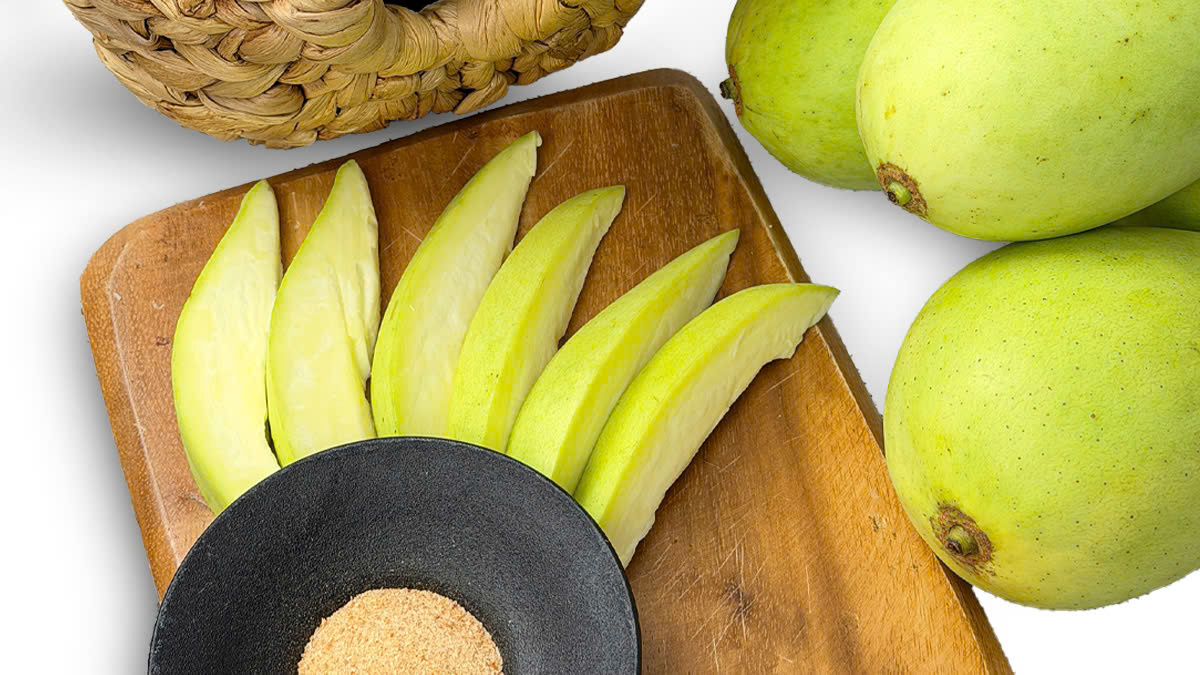
These remain some of the most consistent criteria across practical mango-buying guides.
How to Choose a Good Cat Chu Mango in Japan
Look at the Skin Color
Many people automatically choose the yellowest fruit, but naturally ripened mangoes do not always turn evenly yellow. Tree-ripened fruit often has an uneven yellow tone, while artificially ripened fruit may appear unusually uniform in color.
When choosing Cat Chu mango, we usually prioritize fruit that is:
- naturally bright yellow
- not unnaturally glossy
- free from too many large dark patches
- not wrinkled
This simple check helps reduce the chance of choosing fruit that looks attractive but is already past its best eating stage.
Gently Press to Check Ripeness
When you gently press the middle of the fruit, ripe Cat Chu mango should feel slightly soft but still firm. If it feels too hard, it is usually still green. If it feels too soft, it may be overripe or already declining in quality. Some buying guides also suggest that a good mango should soften evenly rather than feeling mushy in only one area.
From our own experience, a mango that is “good to eat soon” usually feels heavy in the hand, gives slightly under pressure, and has a fragrance that is beginning to show clearly.
Smell the Stem
The stem is one of the most useful places to check. Buying guides for Cat Chu mango note that a fresh, green, firm stem with a noticeable fragrance is a good sign of natural ripening. On the other hand, a stem that is wilted, blackened, mushy, sour-smelling, or chemical-smelling should be avoided.
For us, this is one of the fastest and most reliable checks when selecting whole mangoes.
Observe the Shape and Stem
A good Cat Chu mango often has:
- a balanced shape
- a full body
- rounded shoulders
- a firm stem
- a heavy feel in hand
Some guides also mention looking at the “eye” near the bottom of the fruit: the smaller the eye, the smaller the seed may be, which usually means more flesh. Fruit in the 350–450 gram range is often considered a practical size with a good flesh-to-seed ratio.
Signs You Should Avoid
You should avoid mangoes with the following signs:
- heavily wrinkled skin
- excessive softness
- a hollow or light feel
- wilted or detached stems
- sour smell, alcoholic smell, or unusual odor
- large dark patches on the surface
These signs often suggest the fruit is overripe, poorly stored, or not naturally ripened.
Compared with Cat Hoa Loc Mango, Is Cat Chu Mango Better?
There is no absolute answer, because each variety is good in a different way. According to comparison guides, Cat Hoa Loc mango is often described as sweeter, reaching around 20–22% Brix, with a stronger fragrance and larger fruit size. In contrast, Cat Chu mango offers more balance, is often easier to buy regularly, and fits everyday eating better.
From the perspective of customer preference, we often see that people buying mangoes for daily use tend to choose Cat Chu mango, while those looking for a stronger sweetness or a gift-style fruit may lean toward Hoa Loc.
When Should You Choose Cat Chu Mango?
You should choose Cat Chu mango if you want:
- a mango for everyday eating
- light sweetness
- low fiber
- easy slicing for chilled serving
- something suitable for the whole family
In our experience, this is a “safe” choice for first-time buyers because it suits a wide range of preferences.
When Should You Choose Cat Hoa Loc Mango?
You may prefer Hoa Loc if you want:
- a stronger aroma
- a richer sweetness
- a more premium feel for gifting
Still, for regular family use, Cat Chu mango often remains the more balanced option.
What Is the Best Way to Enjoy Cat Chu Mango in Japan?
Eat It Chilled
This is usually the first method we recommend. When cooled just enough, Cat Chu mango becomes:
- more gently fragrant
- lighter and fresher in sweetness
- firmer and easier to enjoy
Because it is low in fiber, eating Cat Chu mango chilled is often the easiest way to appreciate the fruit’s texture and balance.
Make Smoothies or Juice
For fruit that is slightly more ripe, smoothies are an excellent option. The soft, smooth, low-fiber flesh of Cat Chu mango makes it easy to blend and pleasant to drink without a grainy texture. From our experience, this is also one of the best ways to use fruit that is slightly too soft for clean slicing but still very flavorful.
Use It in Desserts
Besides eating it fresh, Cat Chu mango also works very well in chilled desserts such as:
- mango yogurt
- mango panna cotta
- mango sauce
- sliced mango served after meals
Its golden color and gentle sweetness make it easy to pair with many dessert formats.
How to Store Cat Chu Mango After Buying It in Japan
If the Mango Is Not Yet Ripe
The National Mango Board recommends keeping unripe mangoes at room temperature and not refrigerating them before they ripen. Some practical guides also suggest placing mangoes in a paper bag or dark container and checking them regularly. They can also be stored near ripe bananas or apples to support ripening through ethylene gas.
This is the method we usually recommend when customers want to buy their fruit a few days in advance.
If the Mango Is Already Ripe
Once ripe, the National Mango Board states that whole mangoes can stay in the refrigerator for up to about 5 days. If cut, mango can be stored in an airtight container in the refrigerator for several days, while freezing can extend its storage life even further.
From our experience, Cat Chu mango tastes best when enjoyed soon after it reaches the ideal ripeness, because the flesh softens quickly if kept too long.
Who Should Buy Cat Chu Mango in Japan?
Cat Chu mango is especially suitable for:
- Vietnamese people in Japan who want fruit with a familiar taste
- families with children or elderly members
- people who prefer low-fiber, soft, easy-to-eat mangoes
- buyers who want mangoes for regular use rather than only for special occasions
At HD FRUITS JAPAN, we see this variety as a particularly good match for customers who value consistency, easy eating, and a flavor that is not too strong.
Quick Answers About Cat Chu Mango
Is Cat Chu mango in Japan sweet?
Yes, but usually in a light, balanced way, not an overly intense one. Some guides estimate naturally ripened mango sweetness at around 18–20% Brix..
Does Cat Chu mango have a lot of fiber?
No. Common descriptions consistently note that Cat Chu mango has thick, smooth flesh and relatively little fiber, which makes it pleasant to eat.
Should you choose a fully yellow mango or one that is still slightly green?
If you want to eat it soon, choose fruit that is naturally yellow and slightly soft. If you want to keep it a few more days, choose one that is still a little firmer. Mangoes that are not fully ripe should be kept at room temperature rather than refrigerated immediately.
Is Cat Chu mango better eaten fresh or in smoothies?
If the fruit is just ripe, eating it fresh is the best way to enjoy its natural aroma and light sweetness. If it is more fully ripe, smoothies are a great way to make full use of the soft flesh. In our experience, both are excellent — it simply depends on the ripeness of the mango.